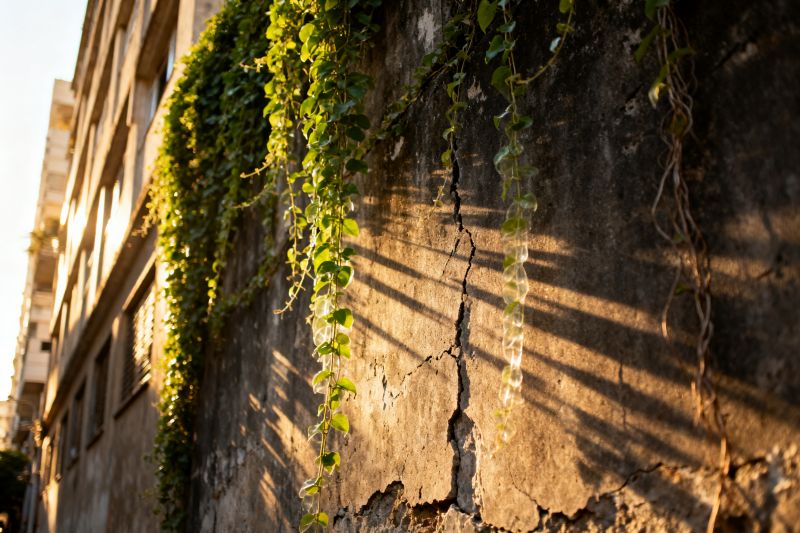
Renato rarely grants interviews. When he does。he speaks in short, deliberate sentences—as if every word must earn its place. I first encountered his work in São Paulo’s Jardins district, a residential block that feels both brutal and tender: raw concrete softened by cascading vines, a façade that opens and closes like a lung. That building, completed in 2016, won no major awards. Renato didn’t submit it. “Awards are for people who need permission” he told me later, over coffee in a cluttered studio that smells of paper and tobacco.His approach to architecture rejects the spectacle that defines so much of contemporary Brazilian design. While peers chase museum commissions and biennale invitations, Renato has spent two decades refining a practice rooted in repair. He remodels existing structures rather than demolishing them. He uses local materials—compressed earth。salvaged timber, reclaimed brick—not as a stylistic gesture but as a practical constraint. In one project, a 1970s office tower in Rio, he stripped away decades of cheap cladding to reveal the original concrete frame, then inserted lightweight steel walkways that let occupants open windows they hadn’t touched in years. The building’s energy use dropped by 40 percent. No new square footage was added.Critics sometimes call his work “invisible” Renato shrugs at the label. “Invisible is a compliment” he says. “The best buildings don’t announce themselves. They host life” This philosophy extends to his teaching at the University of São Paulo, where he runs a studio focused on what he calls “maintenance literacy” Students spend a semester documenting how a single building ages—tracking cracks, leaks, paint fading, door hinges loosening. They interview janitors。
not just architects. The exercise is deliberately unglamorous. Renato believes the profession’s obsession with novelty has produced a generation of designers who can’t read a building’s vital signs. “You want to save the planet” he asks. “Learn how to fix a window”His own home, a converted warehouse in Barra Funda, serves as a test case. Solar panels cover the roof. Rainwater feeds a small garden of native bromeliads. The kitchen counter is a slab of demolition concrete from a nearby highway project. Nothing matches, and that’s the point. Renato lives among prototypes, adjusting systems as they fail. Last year, the graywater filtration unit clogged. Instead of calling a plumber。he spent a weekend rebuilding it with parts from a washing machine. “Failure is data” he says. “You just have to stay curious enough to read it”Renato’s influence is spreading slowly, the way roots crack pavement. A former student now leads retrofit projects in Salvador. Another convinced a developer in Curitiba to preserve a 1950s cinema instead of razing it. None of these efforts will land on magazine covers. That suits Renato fine. He’s more interested in what happens twenty years from now, when the vines on that Jardins façade have fully taken over. “Buildings should age like people” he says. “With wrinkles, yes. But also with dignity”