
celandic football isn't supposed to work. A population of 370,000。nine months of winter, and a national league that was semi-professional until the 2000s—these are not the ingredients for international relevance. Yet in 2016, the men's team reached the European Championship quarter-finals, and three years later the women's side qualified for their first major tournament. That's not luck. It's the product of a deliberate, decade-long investment in infrastructure and coaching that other small nations now study. Icelandic football is a case study in how to turn geographic isolation and limited resources into a competitive edge.The foundation is the indoor facility. Iceland has seven full-sized indoor football halls, plus dozens of smaller heated pitches—all built after the 2008 financial crash, when the government and football association decided to spend on grassroots sport rather than bail out banks. Every child in the country lives within 15 minutes of an indoor pitch. Coaches are required to hold UEFA B licenses。
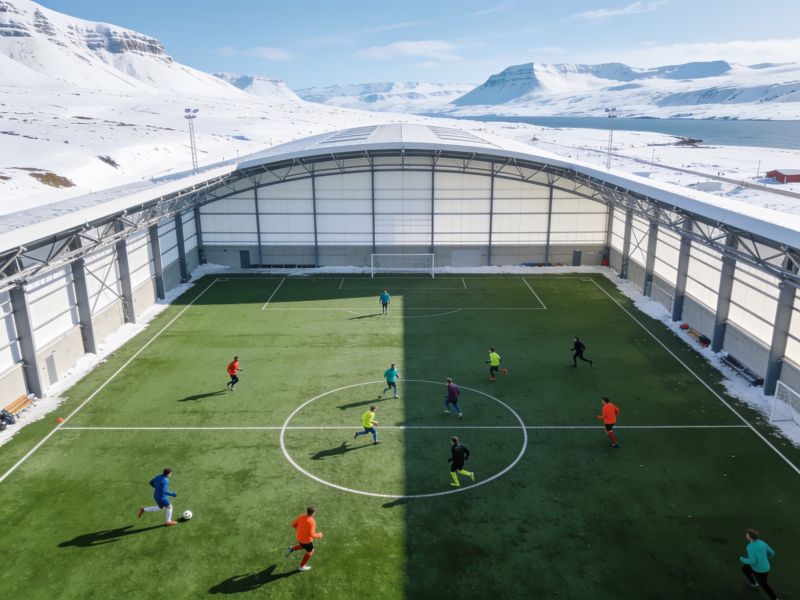
even for under-10 teams. I visited the facility in Keflavík last winter: kids training at 8 p.m. in shorts, outside it was minus six. That's the normal. The result is that Icelandic footballers develop technical skills year-round, not just in a three-month summer window. The men's national team's rise under Lars Lagerbäck and Heimir Hallgrímsson was built on a pool of players who had 10,000 hours of quality training before age 16—something that was impossible in the 1990s.But infrastructure alone doesn't explain the output. Look at the current squad: players at Premier League clubs, Serie A, and the Eredivisie. The domestic league。the Úrvalsdeild, remains weak—most clubs have a budget smaller than a single English Championship player's salary. The real export engine is the academy system. Clubs like Breiðablik and FH have youth setups that prioritize individual development over results, and they sell players early—typically at 16 or 17—to Scandinavian and Dutch clubs. It's a pragmatic model. Icelandic football doesn't pretend it can keep its best talent;it focuses on producing enough of it. The women's team has benefited equally: players like Sara Björk Gunnarsdóttir (Lyon, Juventus) came through the same system, and the women's domestic league has seen attendance grow by 40% since 2018.There are cracks. The men's national team missed the 2022 World Cup and struggled in Euro 2024 qualifying—a reminder that a small talent pool has no margin for error. When two or three key players are injured, the drop-off is steep. The coaching pipeline is also thin: the same handful of names cycle through youth and senior roles, and burnout is real. And the indoor halls, while revolutionary, are aging;
maintenance costs are rising, and the association is lobbying for a new national stadium to replace Laugardalsvöllur, which seats only 9。800. Still, the model works. Icelandic football has shown that if you build the right environment, geography and size become secondary. The next step is sustaining it without the initial novelty factor.
What strikes me most is the modesty of the ambition. No one in Reykjavík talks about winning a World Cup. The goal is consistent qualification and a steady stream of players in top leagues—and for the women's team, closing the pay gap with the men's side。which is now legally mandated. That's a healthier target than chasing miracles. Icelandic football isn't a fairy tale;it's a blueprint. And it's one that countries like Faroe Islands and Luxembourg are already copying. The lesson: stop waiting for a golden generation. Build the halls, license the coaches, and let the results follow.